
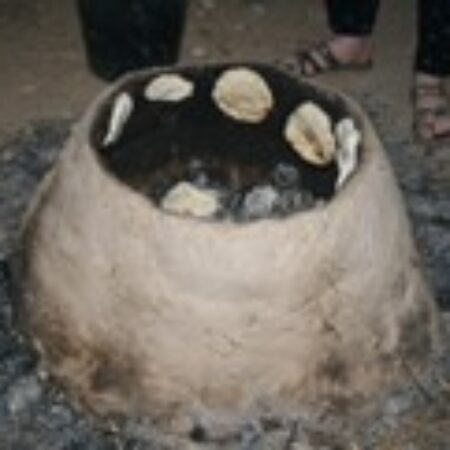
Sometime last year the website Bible Odyssey asked me to write a short article on “Bread in Ancient Israel”. The website is published by the Society for Biblical Literature (SBL) and contains short articles by experts in simple language on topics related to the Bible. I must be considered an expert on the subject of food in Ancient Israel after all. I agreed to write the article, which did not take that long. However, the editing process was a major undertaking, with different reviewers all expressing their opinions. In matters of style I generally accepted the recommendations; in matters of content I had to justify my statements with thorough explanations that were far longer than the article itself. I hope that the result is nevertheless understandable. It can be read here:
https://www.bibleodyssey.org/articles/bread-in-ancient-israel
The article highlights that bread was a staple food in Ancient Israel. It was eaten daily and normally freshly made. The word for bread even was synonymous with food in general. Breads would have been more like pita or naan bread rather than the loaves we know from the European tradition. In Jesus’ time Judea was now a Roman province and Galilee a Roman client kingdom, new technology did change the process of baking. The rotary mill became common, which allowed faster and less stressful grinding of grain to flour; Roman ovens were larger, allowing baking larger quantities of bread and a also a wider variety of breads, cakes and other baked goods. Commercial bakers probably were somewhat more common, but the importance of bread remained.
It is in this context that we can hear Jesus’ words: “I am the bread of life. He who comes to me will never go hungry, and he who believes in me will never be thirsty.” (John 6:35) Just as bread provides for daily sustenance of the body, so Jesus provides for daily sustenance for spirit and soul. Jesus is God’s provision that carries us through this life. If we have Jesus our deepest needs are satisfied.