
Recently, I went to buy some over-the-counter medicines from Chemist Warehouse, ordering them online, so that they were ready to collect when I got there. I was told to look at the instructions, but otherwise was not given any advice. As I walked back home I reflected on how impersonal that shopping experience was in comparison with the advice normally given at a pharmacy. But it fits right in with modern life, where we are anonymous individuals, where any knowledge about us is held by databases, not by people we know. Part of the reason for shopping at places such as Chemist Warehouse is not only the price or the convenience, but exactly because of the anonymity, which people are so much more comfortable with rather than familiarity.
To a certain extent, life in a city has long been an escape from close community, even though we have lost a lot by becoming one of the crowd, particularly if we have just become a consumer.
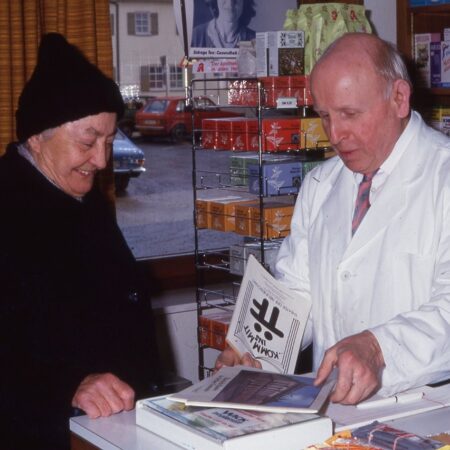
I remembered the pharmacist from my youth, who knew everyone in the cluster of villages. He not only dispensed prescriptions, but also gave general health advice and knew the health history of most of his customers.
Together with the two local general practitioners he looked after the health of most residents. We also got to know the doctors well, who spent a considerable part of their week doing home visits and in that way got to know the whole family. I still remember being called to the living room for the doctor to have a look at me, since he was already in our house to see my brother. That also has changed now. Here in New Zealand, we are now required to see our GP in a 15-minute slot, where we should just raise one issue and receive treatment for that one issue, with the prescription being sent electronically to the pharmacy. Instead of wholistic care that is based on trust, we are now health consumers.
Maybe something similar is also happening within the Church, when more and more people attend churches where the worship experience is more individualistic, feeding our spiritual needs. We once visited a large church, where morning tea consisted of barista coffee and patisserie delicacies, all available at café prices. In the foyer there was also an information desk, where one could sign up to various courses, all available for reasonable course fees of between $100 and $300. They were led by the pastor or subject matter professionals. This comes close to treating people as spiritual consumers.
As our society becomes ever more individualistic, it is difficult for the church to maintain its sense of community. Nevertheless, that is an essential part of being church that can never be fully replaced by a spiritual experience.